
Last updated November 21, 2026
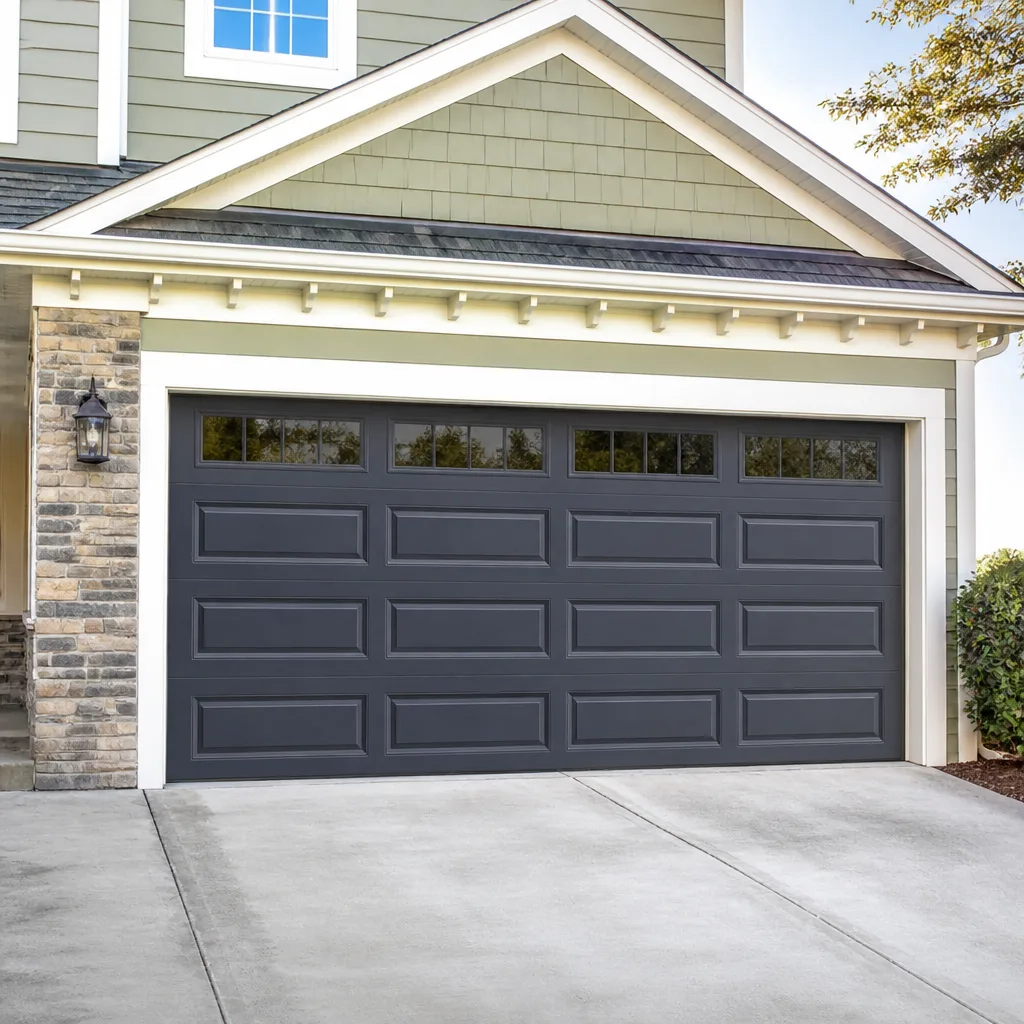 Raised-panel steel
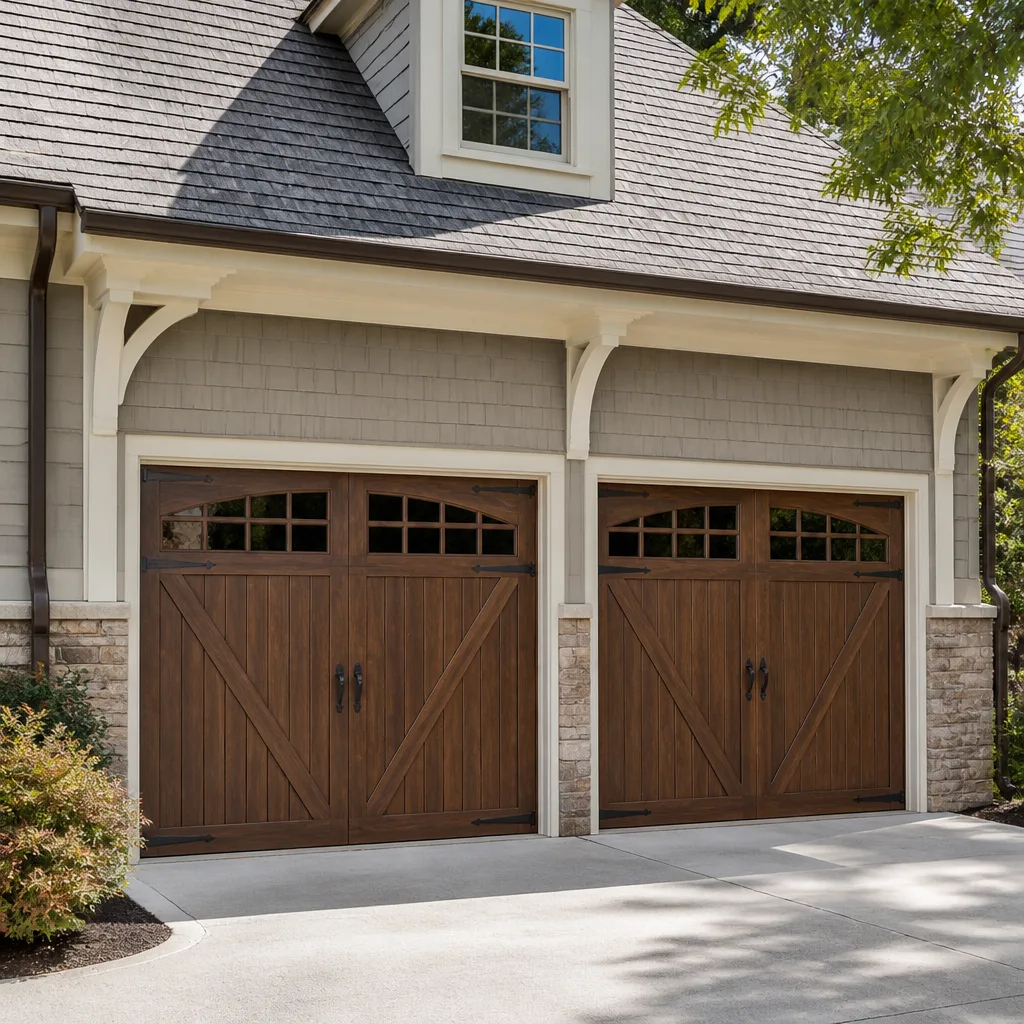 Carriage house
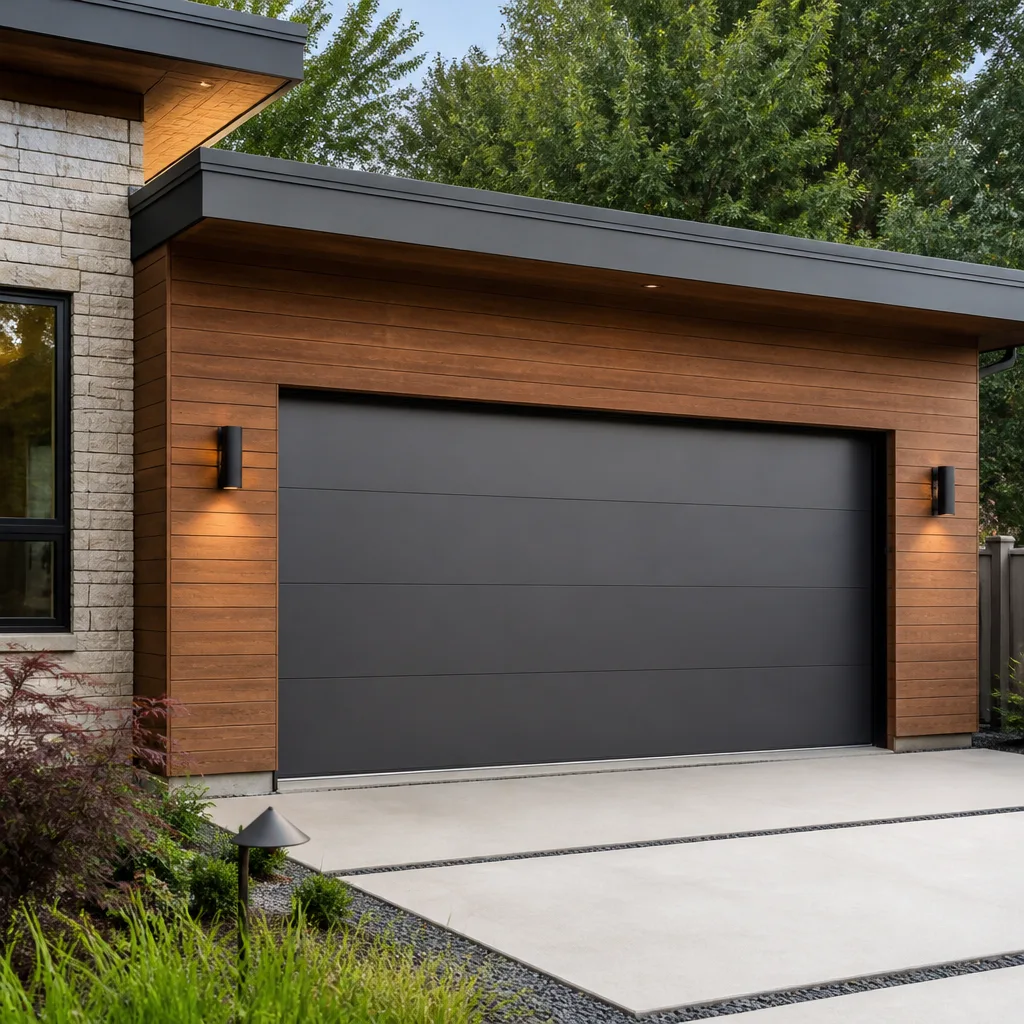 Modern flush
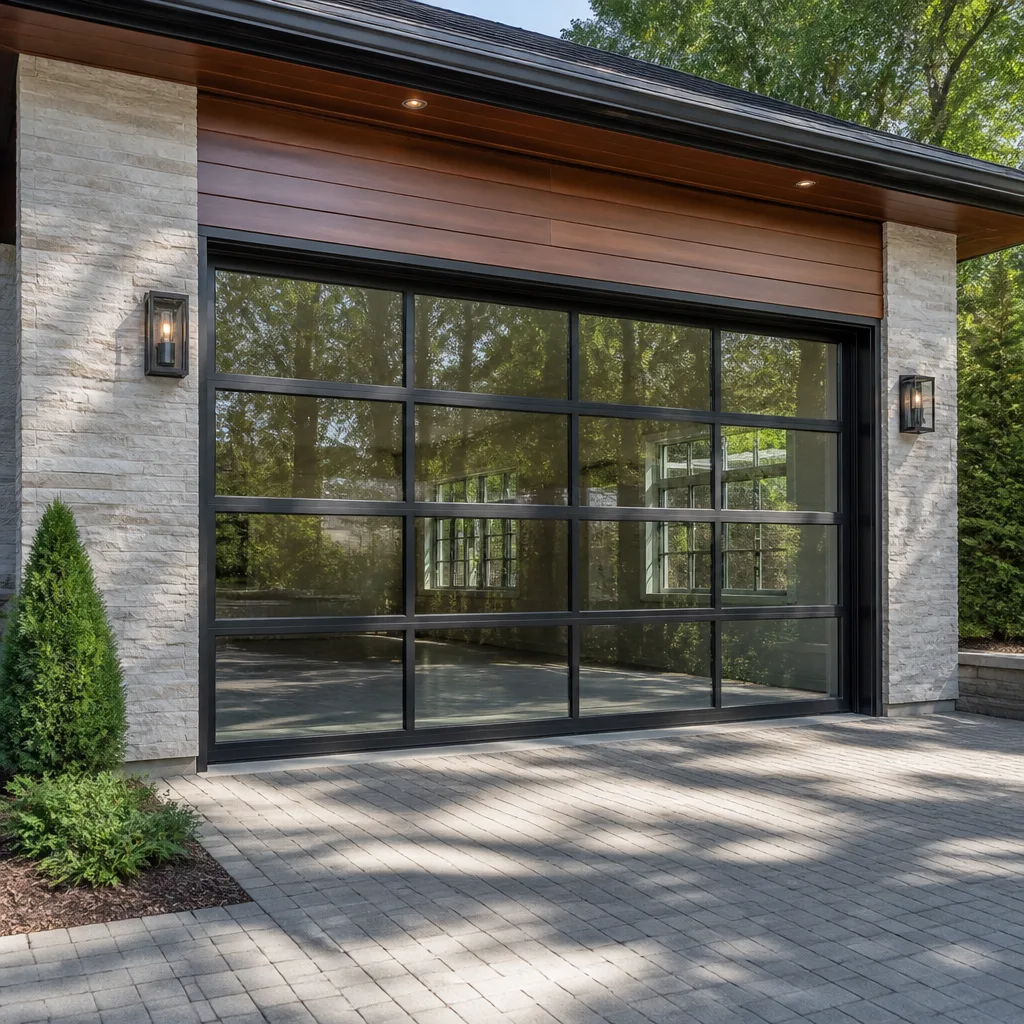 Full-view glass
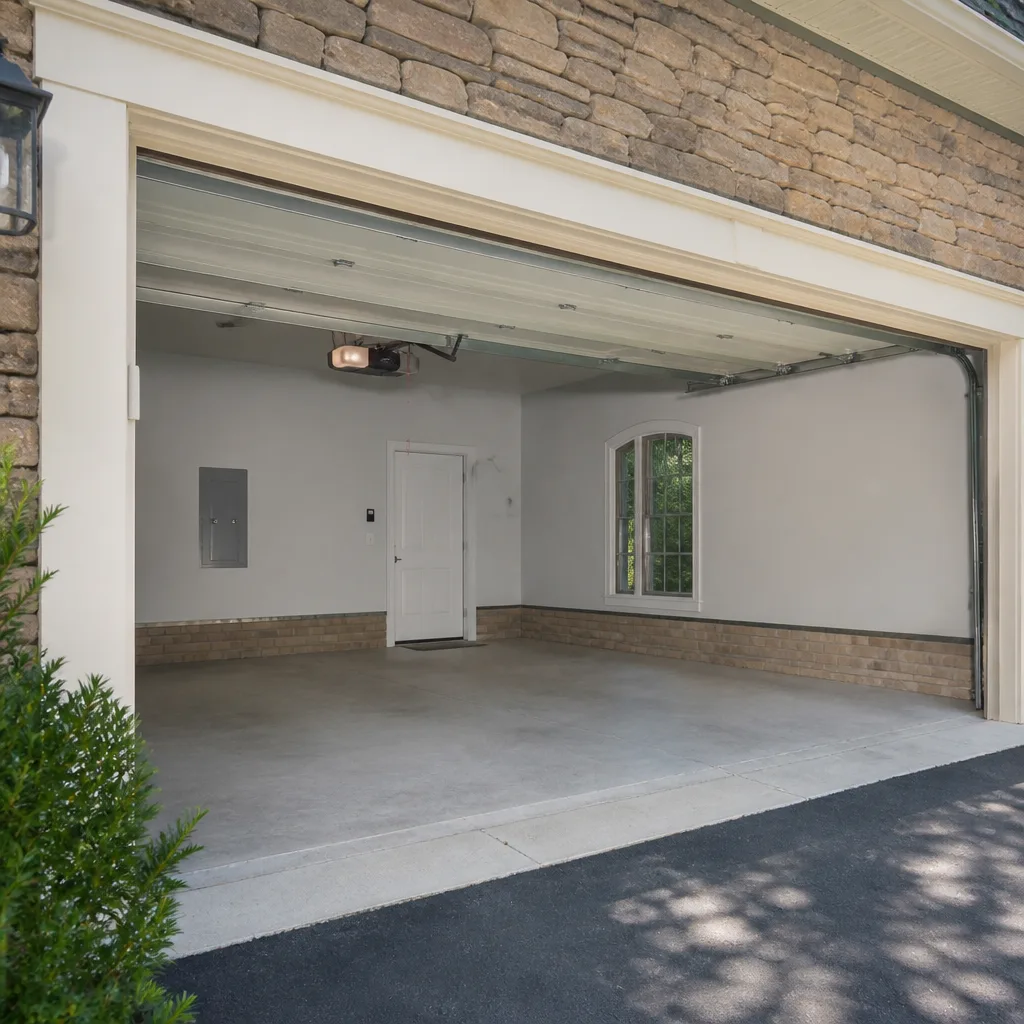 LiftMaster openers
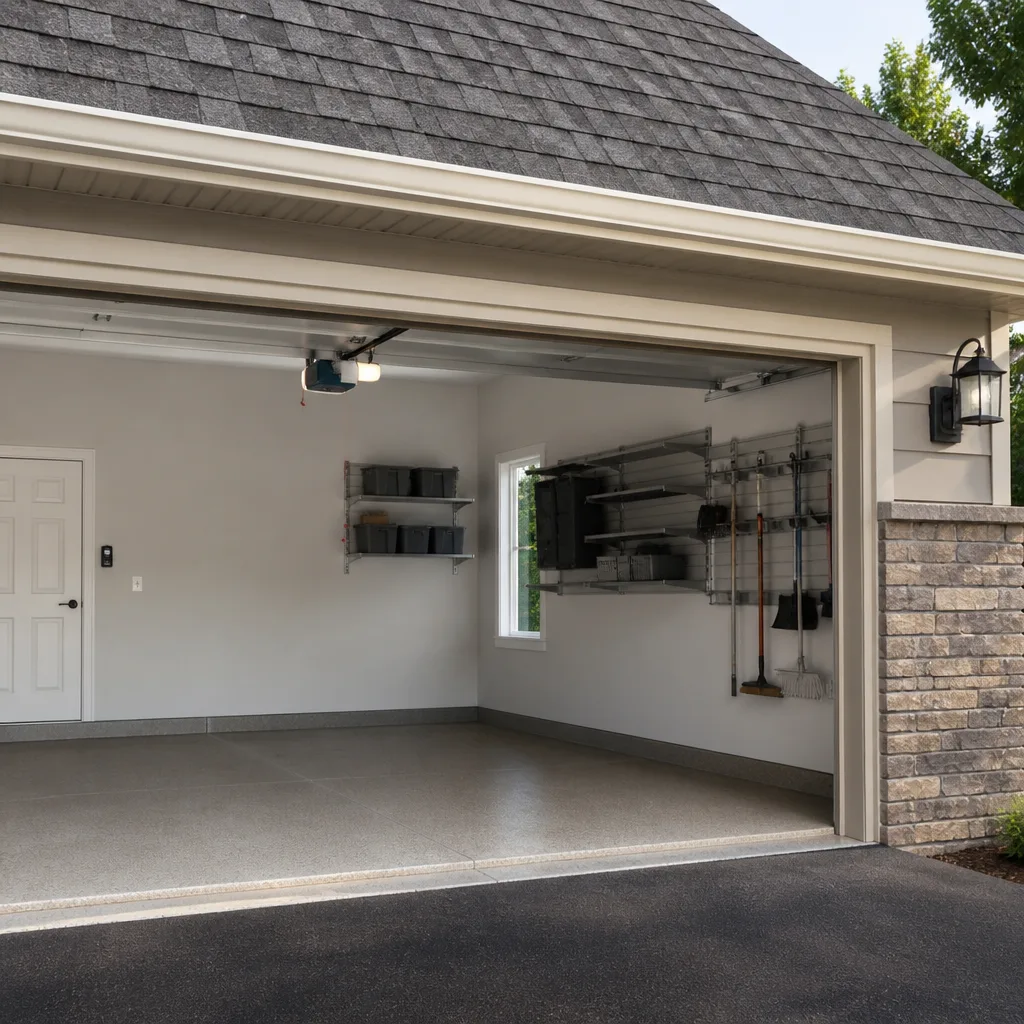 Chamberlain openers
Full 25-point door and opener safety check with every visit - springs, cables, rollers, tracks, and your LiftMaster or Chamberlain opener included
You get a price before we start. It does not change when the pro arrives.
Get your free estimateDIY vs Professional Garage Door: The Lowell Homeowner’s Decision Guide
Most garage door advice splits into two useless camps: “you can fix anything with a tutorial” and “never touch it, call a pro.” Neither is honest. The real dividing line isn’t skill. It’s stored energy. A wound torsion spring holds enough mechanical force to kill someone if it lets go, and no video changes that physics. Meanwhile, weatherstripping, sensor alignment, and remote programming are genuinely doable for a careful homeowner with basic tools. This guide draws the line precisely for Lowell homeowners, task by task, so you know what to attempt and what to leave alone.
Quick Answer
You can safely handle weatherstripping, photo-eye alignment, remote and keypad programming, track cleaning, and basic lubrication yourself. You should not touch torsion springs, extension springs, cables, or bottom brackets: those store lethal energy and require specialized winding tools. Everything in between (rollers, hinges, a noisy opener) depends on your tools and comfort level. Spring work is the one category where DIY is genuinely dangerous, not just difficult.
Styles & brands we work with
- Raised-panel steel
- Carriage house
- Modern flush
- Full-view glass
- LiftMaster openers
- Chamberlain openers
Table of Contents
- Where the real DIY risk line sits
- DIY-safe garage door tasks in Lowell
- Professional-only tasks: springs, cables, and brackets
- The middle ground: what DIY actually saves in Lowell
- What a tutorial prepares you for (and what it doesn’t)
- Massachusetts liability and code context
- The hybrid approach: diagnose and prep, then hand off
- How Lowell weather affects the decision
Where the Real DIY Risk Line Sits
The garage door is your home’s largest moving part, and it’s also the only one with components under constant mechanical load. That’s the whole reason the DIY question is harder than it looks. A stuck window or a squeaky cabinet hinge fails quietly. A garage door component fails with force.
Torsion springs are the clearest example. When a technician winds a torsion spring, it stores energy that stays locked in the metal for the life of the spring. If it releases unexpectedly during a repair, the result can be fatal, and that’s not liability language designed to scare you off a project. It’s how stored mechanical energy works. Extension springs carry the same risk in a different geometry, and they typically need safety cables even when they’re functioning correctly.
Cables and bottom brackets sit in the same category. The cables are under tension from the springs at all times, and the bottom bracket is the anchor point for that tension. Loosen the wrong bolt without relieving the spring force first, and the assembly can move violently.
Everything above that line is different. Weatherstripping, sensor alignment, remote programming, and cleaning don’t store energy. If you get them wrong, the door doesn’t close or the remote doesn’t work. Annoying, not dangerous.
That’s the line this guide draws. Not “DIY is bad” and not “pros are always necessary.” Just: these tasks carry a risk that no amount of preparation fully removes, and these tasks don’t.
DIY-Safe Garage Door Tasks in Lowell
If you’re mechanically comfortable and have a few basic tools, these jobs are well within reach. They’re also the ones where a professional visit is hardest to justify on cost alone.
- Replacing bottom weatherstripping. A worn seal lets cold air, water, and pests into a Lowell garage. The replacement slides into a channel on the bottom section and needs no spring work. Measure the door width and buy the matching profile.
- Aligning photo-eye sensors. If the door reverses for no reason, the two sensors near the floor are probably misaligned or have a spider web across the lens. Wipe both lenses and check that the indicator lights are solid, not flickering.
- Programming remotes and keypads. Whether you have a LiftMaster or Chamberlain opener, the pairing process is a button press on the motor head followed by a press on the remote. The manual for your model has the exact sequence.
- Lubricating rollers, hinges, and tracks. A garage door lubricant (not WD-40) on the moving metal parts quiets a noisy door and slows wear. Wipe the tracks clean rather than greasing them.
- Cleaning and inspecting tracks. Dirt and grit cause most slow or jerky door travel. A damp cloth and a visual check for dents or separation is enough.
- Replacing light bulbs in the opener. Use the bulb type listed for your model. Some openers are picky about LED bulbs that interfere with the remote signal.
- Tightening loose hinge and roller bracket bolts. A socket wrench and a few minutes will silence a rattling door. Don’t overtighten, and don’t touch the bottom bracket.
None of these require relieving spring tension. That’s the test for whether a task belongs on this list.
Professional-Only Tasks: Springs, Cables, and Brackets
This is the short list, and it’s the one that matters most. If a task requires you to relieve or adjust spring tension, it belongs to a technician with the right winding bars and the training to use them safely.
- Torsion spring replacement. The spring above the door stores the energy that lifts it. Replacing it means winding a new spring to the correct tension, and getting that wrong either leaves the door too heavy to lift or overloads the system.
- Extension spring replacement. Older Lowell homes often have extension springs running along the tracks. They stretch rather than wind, but they carry the same stored energy and need safety cables installed correctly.
- Cable replacement. The lift cables are under spring tension. A snapped or frayed cable means the door is being held by one side, and that’s a call-now situation.
- Bottom bracket work. The bottom bracket anchors the cable at the base of the door. It’s the single most dangerous component to work on without proper training.
- Any repair where the door is stuck open or hanging unevenly. That usually points to a spring or cable failure, and running the opener can make it worse.
In our experience, spring failure is the most common garage door emergency in Lowell, and it’s the one repair where DIY attempts most often make things worse and more expensive. We handle spring repair in-house rather than referring it out, because it’s a repair that demands the right tools and a trained hand. If you suspect a spring or cable problem, our garage door spring repair team can take a look and give you a written price before any work starts.
The Middle Ground: What DIY Actually Saves in Lowell
For tasks in the middle (a noisy opener, worn rollers, a door that runs rough), the DIY-versus-pro question comes down to three factors: tool cost, time, and the risk of compounding the problem. In Lowell’s current labor market, the math doesn’t always favor DIY the way homeowners expect.
Take roller replacement. The rollers themselves are inexpensive, and the job takes an hour with a wrench. But if you buy the wrong size, the door runs worse. If you strip a hinge bolt, you’re now paying for two jobs. And if you don’t notice a worn cable while you’re in there, you’ve spent the afternoon on rollers and the door still fails next month.
The same logic applies to opener problems. A Craftsman or Raynor opener that’s behaving oddly could have a failing logic board, a worn gear, or a travel limit issue. Replacing the whole unit on a guess is expensive. Diagnosing it correctly the first time is cheaper, and that diagnostic step is where a specialist earns their fee.
Here’s how to think about it:
- DIY saves money when the task has no stored energy, the parts are cheap, and a mistake is easy to spot.
- DIY costs more when you’re guessing at the cause, buying tools you’ll use once, or risking a second repair on top of the first.
- A professional is worth it when the diagnosis is unclear, the component is under load, or the repair failing creates a safety problem.
For a door that’s just noisy or running rough, a professional tune-up tends to be the more economical call once you price in your own time and the trial-and-error of replacing parts on spec. For garage door opener repair, the diagnosis is usually the whole job. Getting it right the first time is where the money goes.
What a Tutorial Prepares You For (and What It Doesn’t)
A good video will show you the sequence: remove the old spring, install the new one, wind it to spec. What it won’t teach you is how to confirm the new spring is the right size for your door’s weight in the first place. That’s the most common DIY spring-replacement mistake, and it’s the one that matters most.
Springs are rated by wire gauge, inside diameter, and length, and those dimensions correlate to the weight of the door. Put a spring rated for a lighter door on a heavier one and it will be overloaded from day one. The door might open, but the spring will fatigue fast, the opener will strain, and the failure comes sooner. Put an oversized spring on and the door lifts too easily, which masks a problem and puts extra load on the opener.
We’ve seen the results of this often enough to know it’s not a rare mistake. Here’s what a tutorial genuinely does and doesn’t cover:
- It shows you the steps. Pros and cons of the process, the order of operations, the tools needed.
- It doesn’t show you this door. Every door weighs something different, and the spring has to match.
- It doesn’t tell you when to stop. A trained technician reads the symptoms and knows when the problem is bigger than it looks. A video can’t do that.
- It doesn’t cover the failure mode. If something goes wrong mid-repair, a video won’t help you in that moment.
Bottom line: tutorials are good for the safe-list tasks. For spring work, the missing piece (correct sizing for your specific door) is exactly the piece that determines whether the repair holds.
Massachusetts Liability and Code Context
Here’s a question most garage door guides skip: what happens if a door you repaired yourself injures someone?
If a visitor, a child, or a delivery driver is hurt by a garage door you installed or repaired yourself, your homeowner’s insurance coverage may depend on whether the work was done to code and whether the installation met the manufacturer’s instructions. Insurers look at whether the work was done properly and to applicable standards. A door installed off-spec or a spring replaced without correct sizing can complicate a claim.
This matters more than people expect because a garage door is the largest moving object on the property and the one most likely to be in contact with people who don’t live there. Mail carriers, delivery drivers, guests, and kids moving through the driveway all interact with that door.
What to know before you decide:
- Most cities require a permit for structural garage door changes. Replacement of the door or opener is usually the trigger. Ask Lowell’s building department about permit requirements before you install or make a major change.
- Code compliance follows the work. A door installed to the manufacturer’s instructions and current safety standards is a far easier claim to defend than a DIY job with no documentation.
- Keep records. If you do the DIY-safe repairs, keep receipts and notes. If a professional does the work, keep the invoice and the written estimate.
- Doors installed before 1993 may predate modern safety requirements. If your door is older than that, have it evaluated before relying on it.
For any work that involves the door structure, springs, or the opener installation, our garage door repair team can tell you what’s involved and what the permit picture looks like for your address.
The Hybrid Approach: Diagnose and Prep, Then Hand Off
You don’t have to pick between full DIY and full professional. A middle path often saves the most money: do the diagnosis and the setup work yourself, then bring in a technician for the mechanically dangerous portion.
Here’s how that usually looks:
- Take notes on the symptoms. When does the door misbehave: on open, on close, or both? Does it reverse? Is it noisy? Does the opener light blink in a pattern? That pattern is often a diagnostic code.
- Check the safe-list items first. Sensor alignment, remote batteries, track debris, and a visual spring inspection are all things you can do now. Half of “broken door” calls turn out to be a photo-eye issue.
- Clear the area. Move cars and anything stored near the tracks so the technician has room to work and can see the full door.
- Take photos of the labels. The model and serial numbers on your opener and door are stamped on a label on the motor head or the door panel. Send those along with the symptoms.
- Know what you’re asking for. “The door is noisy on the left side” is a better call than “the door is broken.” A precise symptom shortens the job.
If your garage door is stuck open, won’t close, or has visibly broken hardware, that’s not a prep job. Call (866) 605-2979. We answer 24/7. Fast dispatch from 7am to 7pm, Sunday through Friday.
How Lowell Weather Affects the Decision
Lowell’s winters are hard on garage doors in specific ways that change what’s worth DIYing and what isn’t. Freeze-thaw cycles work the door’s seals, hinges, and tracks. Cold makes metal contract and springs stiffer. Snow and ice build up at the base of the door, and the seal takes the load.
That shifts some tasks toward DIY. Replacing bottom weatherstripping is a low-cost, low-risk job that pays off in a Lowell winter, because a worn seal lets meltwater and cold air into the garage and can freeze the door to the floor. Cleaning and inspecting tracks before the first hard freeze prevents ice jams.
But cold also changes the physics of the dangerous jobs. A torsion spring near failure in the summer is a liability in the winter. If your door has been getting harder to lift or the opener has been straining, that’s a sign the spring is losing tension, and cold weather accelerates the failure. That’s the point to call rather than ride it out. A door that’s stiff in October may not open at all in January.
The other Lowell factor is the housing stock. Many homes around neighborhoods like Pawtucketville, Centralville, and Belvidere have older doors and older openers. If you have a Craftsman or Raynor opener that’s been in service for a long time, a professional inspection once a season is money well spent. Older hardware is more prone to failure at the worst time.
If you’re replacing an aging door or opener rather than repairing it, our garage door installation team can measure, order, and install the right fit for your opening. For a new install, the process is measured and scheduled, and you’ll get a written price before work begins.
Common Mistakes to Avoid
- Wind a spring without the right bars. Screwdrivers and vice grips are not winding bars. They slip, and a slipping tool next to a loaded spring is how serious injuries happen.
- Assume a new spring is the right spring. Buying a spring without matching it to your door’s weight is the most common DIY failure. The door might work and still be wrong.
- Ignore the warning sounds. A door that’s loud or slow for weeks is telling you something. Waiting for a full failure usually costs more, especially in Lowell’s cold season.
- Run the opener on a broken spring. If the spring has failed, the opener is lifting far more weight than it was designed for. It will burn out, which adds an opener to the bill.
- Skip the permit check. In Lowell, ask the building department before a door or opener replacement. It’s a five-minute call that prevents a headache later.
- Replace parts on a guess. Buying a new opener before confirming whether the problem is the opener, the spring, or the sensor wastes money. Diagnose first.
- Leave the door hanging open. If a spring or cable fails and the door is stuck open, the garage is exposed. That’s an emergency service situation, not a wait-until-next-week situation.
See the difference
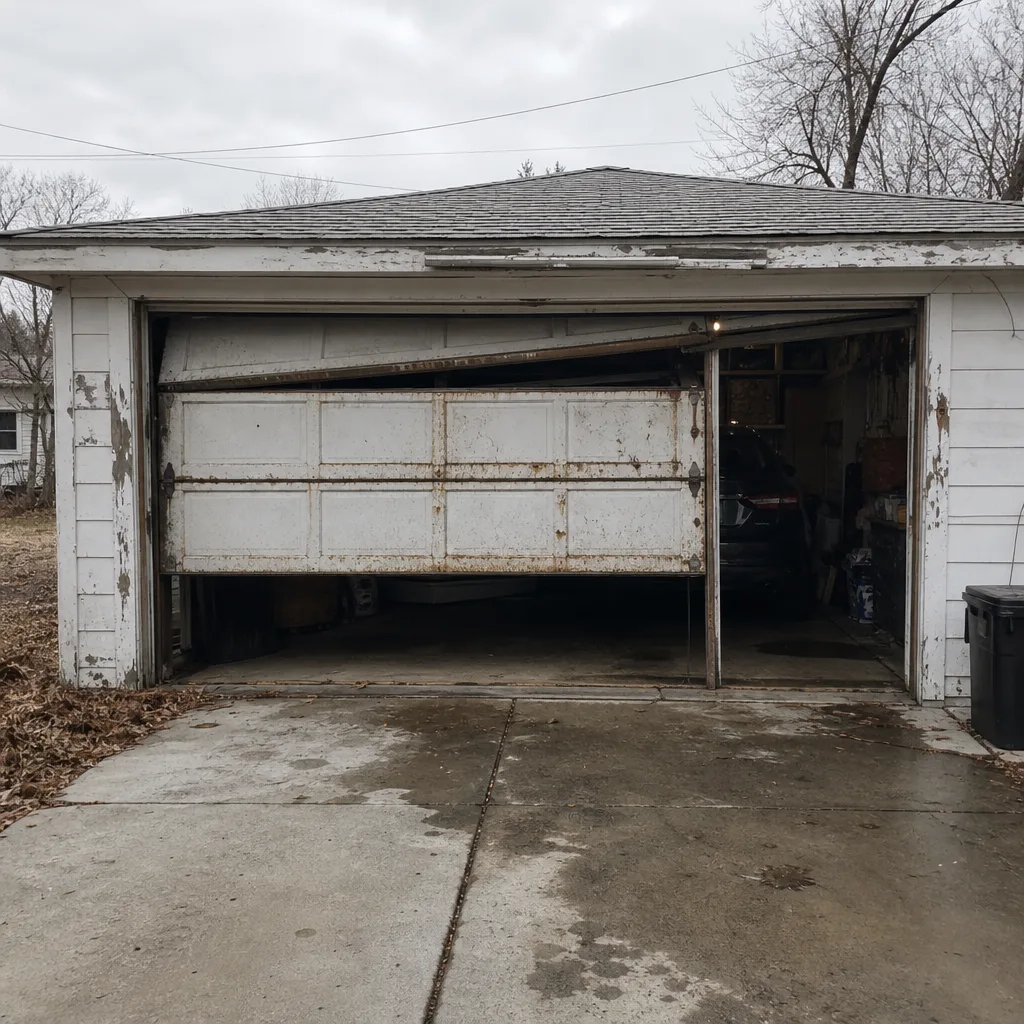 Before
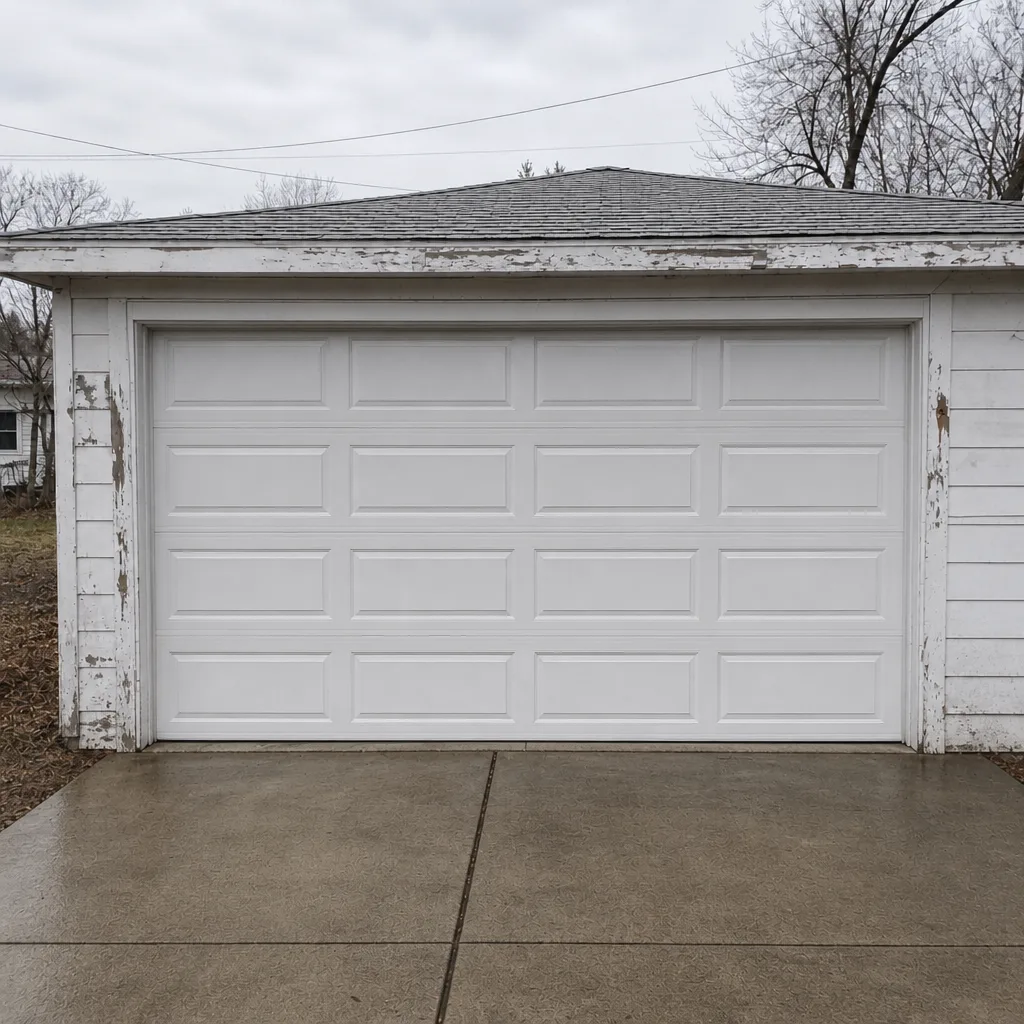 After
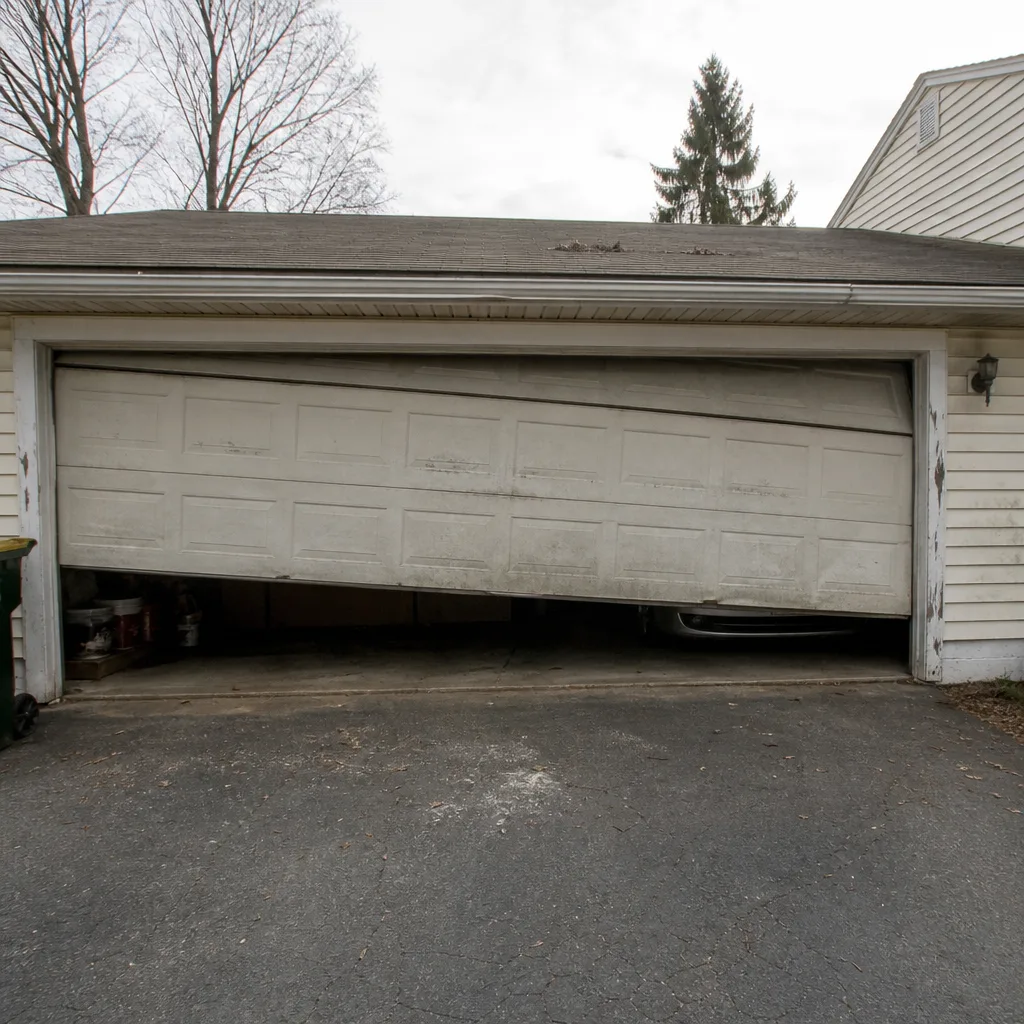 Before
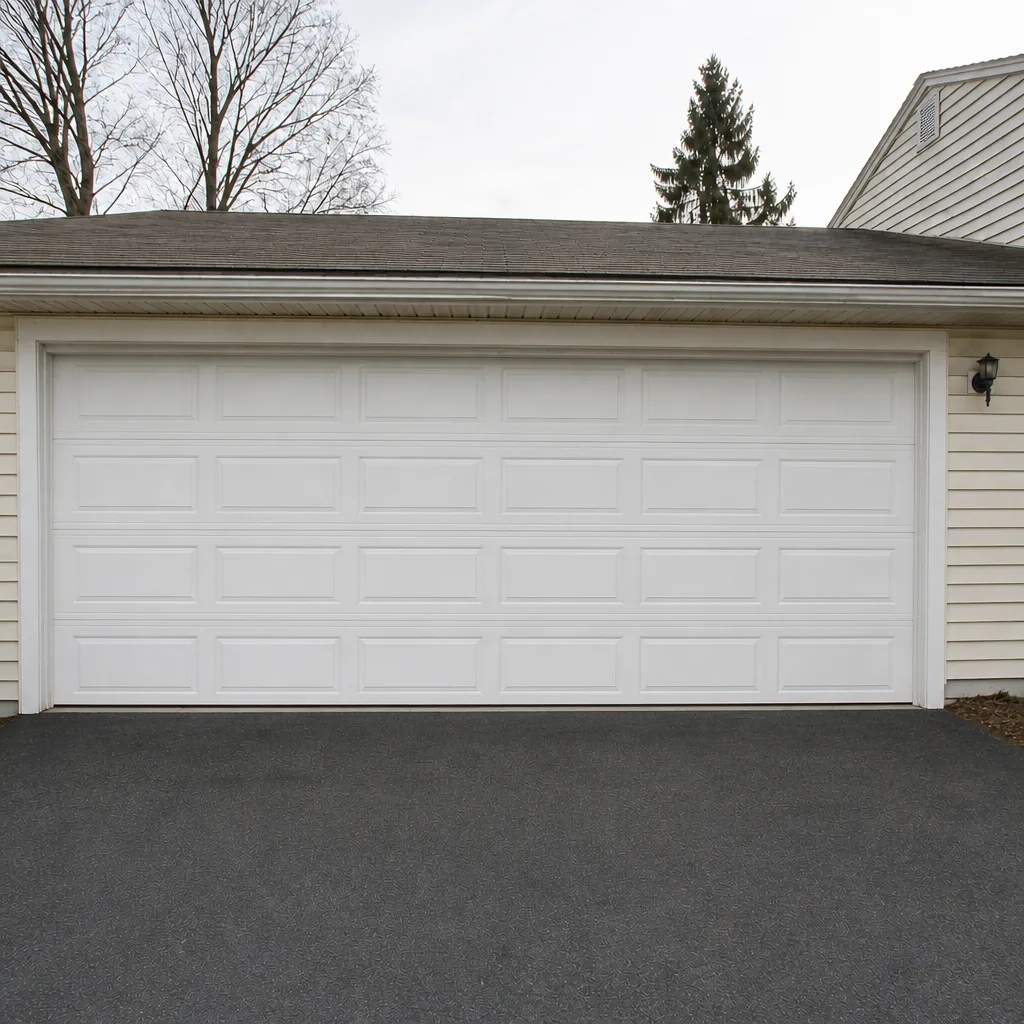 After
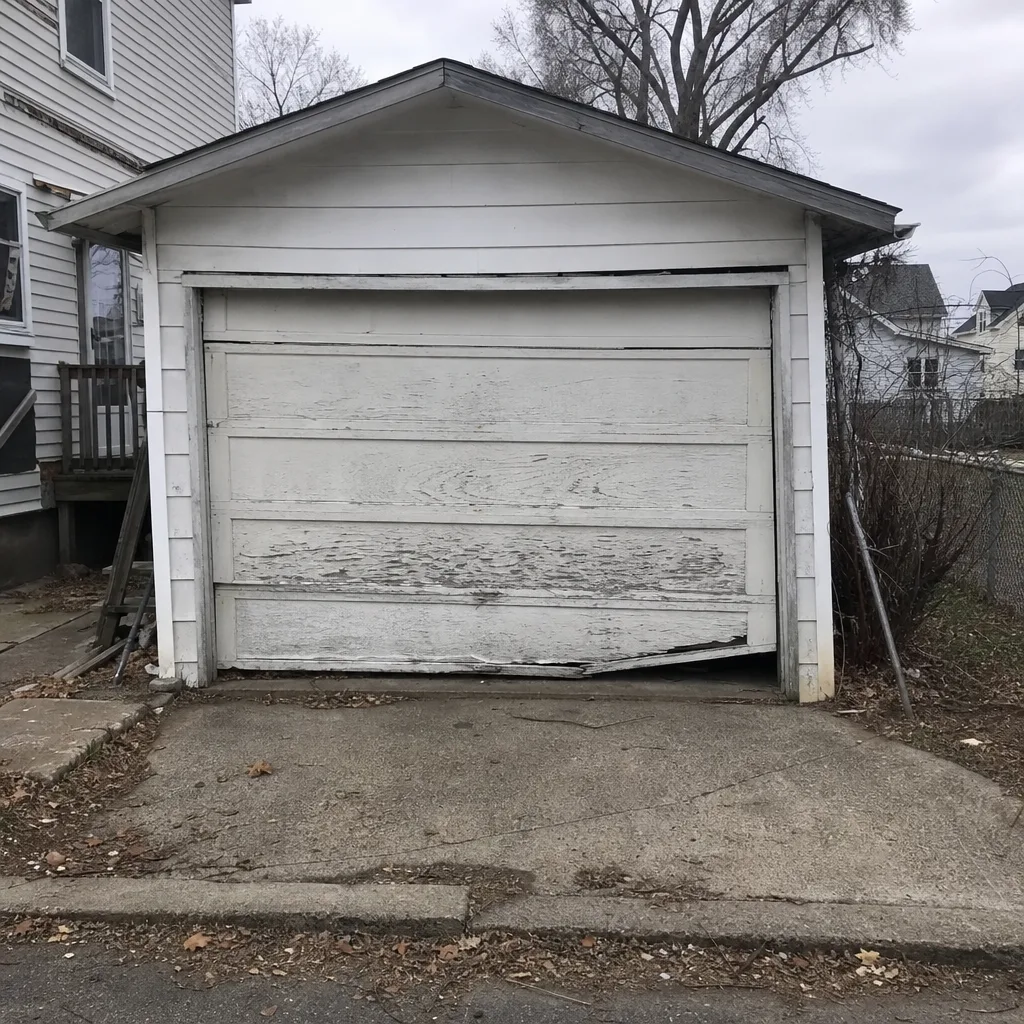 Before
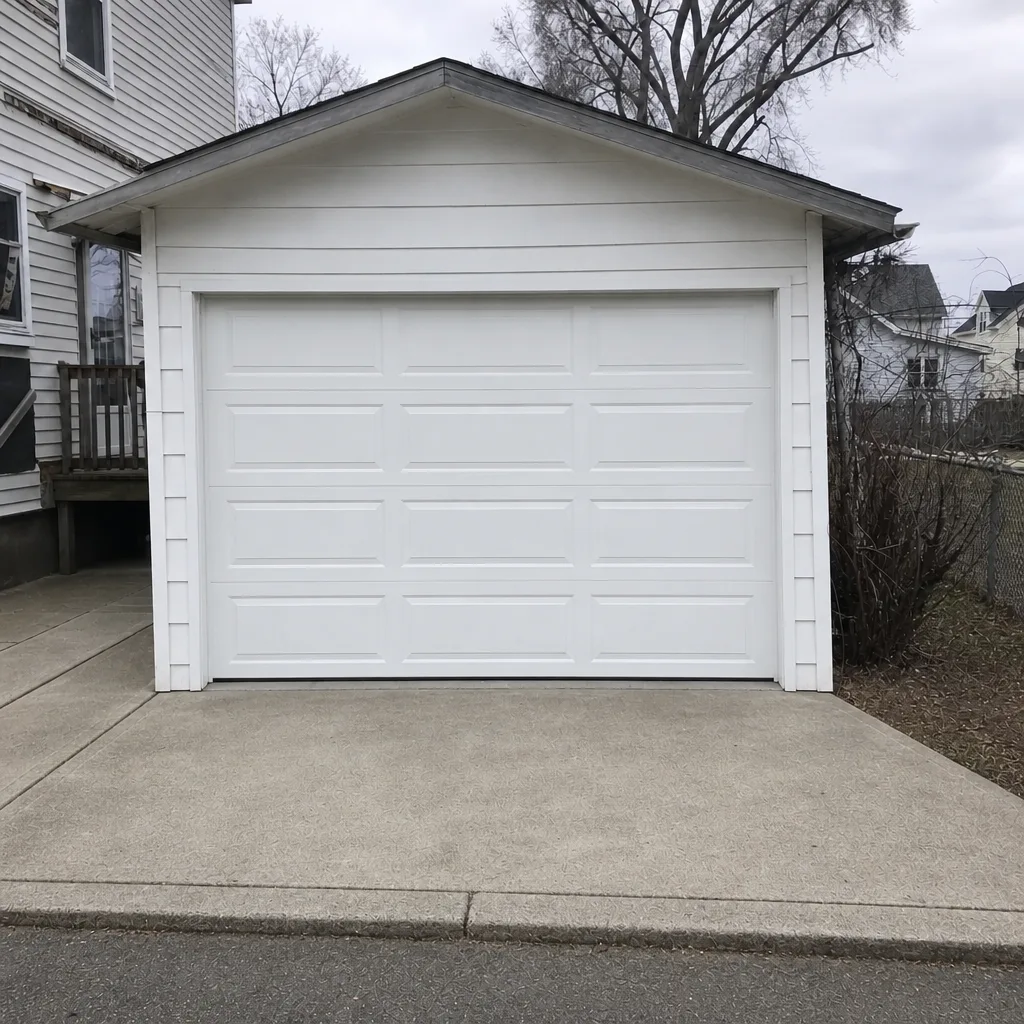 After
When to Call a Professional
Call a professional if a spring or cable is broken or visibly damaged, if the door is stuck open or won’t close, if it’s hanging unevenly or reversing for no reason, or if you’ve replaced the batteries and checked the sensors and the door still misbehaves. Also call if you’re considering a full door or opener replacement. That work involves measuring, ordering, and installation, and it’s not something a tutorial can guide you through safely. Lowell Garage Door Repair offers free estimates in Lowell, call (866) 605-2979. We work on the brands already on your door, including LiftMaster, Chamberlain, Craftsman, and Raynor, so you’re not paying someone to figure out the hardware. The price is quoted and agreed before any work starts, and the written estimate sets the final price.
Frequently Asked Questions
You can, but you shouldn’t. Torsion and extension springs store enough energy to cause serious injury or death if they release during a repair, and correct sizing requires matching the spring to your door’s weight in a way most homeowners can’t confirm. Call a professional. Call (866) 605-2979 for a free estimate.
Weatherstripping, sensor alignment, remote and keypad programming, lubrication, track cleaning, and hinge bolt tightening are all safe for a careful homeowner. None of those require relieving spring tension. If a task puts you near a spring, cable, or bottom bracket, it belongs to a professional.
The most common cause is a misaligned photo-eye sensor near the floor. Wipe both lenses, check that the indicator lights are steady, and make sure nothing is blocking the beam. If the door still reverses, the problem is usually in the opener or a broken spring, and it’s time to call. Call (866) 605-2979 for a free estimate.
Rarely, once you count tools, time, and the risk of a wrong-size spring that fails early or strains the opener. In most cases the lower-risk, lower-cost path is to have the spring sized and installed correctly the first time. Our technicians have up to 15 years of experience with spring work. Call (866) 605-2979 for a free estimate.
Possibly, but coverage can depend on whether the work was done to code and to the manufacturer’s instructions. A door installed or repaired off-spec is a harder claim to defend. For structural or spring work, using a qualified professional keeps the documentation clean.
Yes, emergency garage door service is available for a door that’s stuck open, won’t close, or is a safety risk. Call (866) 605-2979. We answer 24/7. Fast dispatch from 7am to 7pm, Sunday through Friday. We work on the brand already in your garage, and the price is quoted before any work starts.
The Bottom Line
The DIY-versus-professional question for garage doors isn’t about whether you’re handy. It’s about stored energy. Weatherstripping, sensor alignment, and remote programming are safe, useful, and worth doing yourself. Springs, cables, and bottom brackets carry a risk that no amount of tutorial prep fully removes, because the missing piece (correct sizing for your specific door) is the piece that determines success. Use the safe-list to handle the easy wins, prep the rest so a technician can work efficiently, and call for anything under load. That’s the decision that keeps you safe and keeps the door working through a Lowell winter.
If you’re not sure which side of the line your problem sits on, our Lowell Garage Door Repair team is a call away. Our technicians have up to 15 years of experience, we’re trained on 8 major brands including LiftMaster, Chamberlain, Genie, Clopay, Amarr, Wayne Dalton, Craftsman, and Raynor, and we handle repair, opener repair, spring repair, installation, and emergencies as a dedicated garage door specialist. Call (866) 605-2979. We answer 24/7. Fast dispatch from 7am to 7pm, Sunday through Friday. Free estimates, and the price is agreed before any work starts.
Written by the team at Lowell Garage Door Repair.